
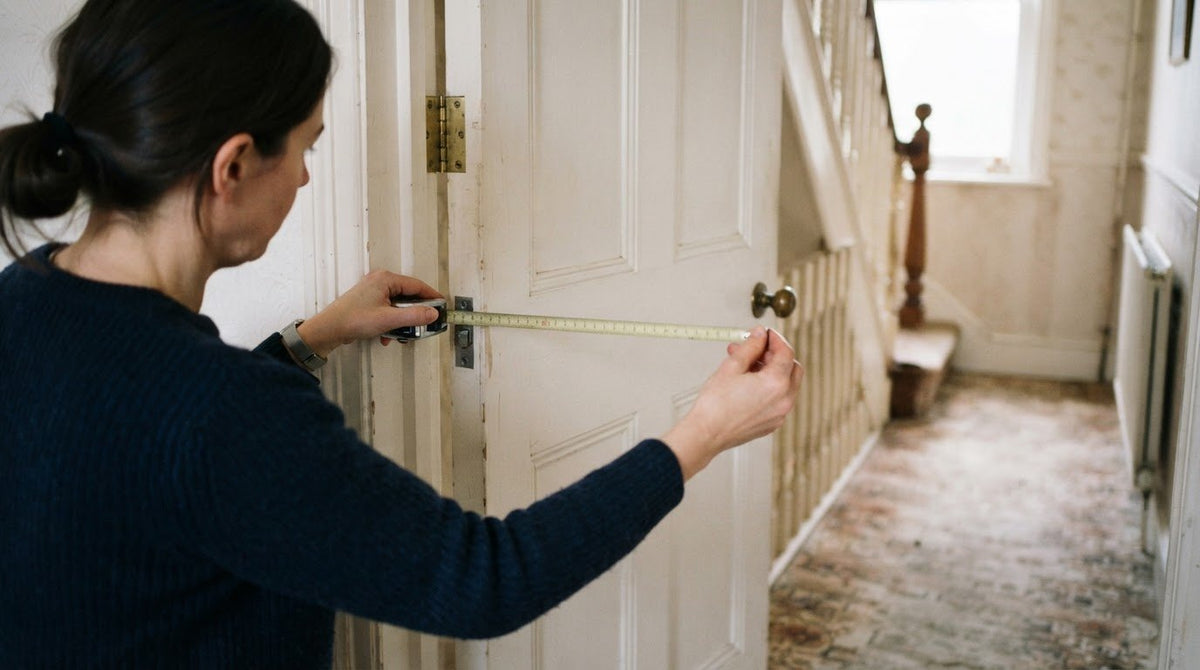
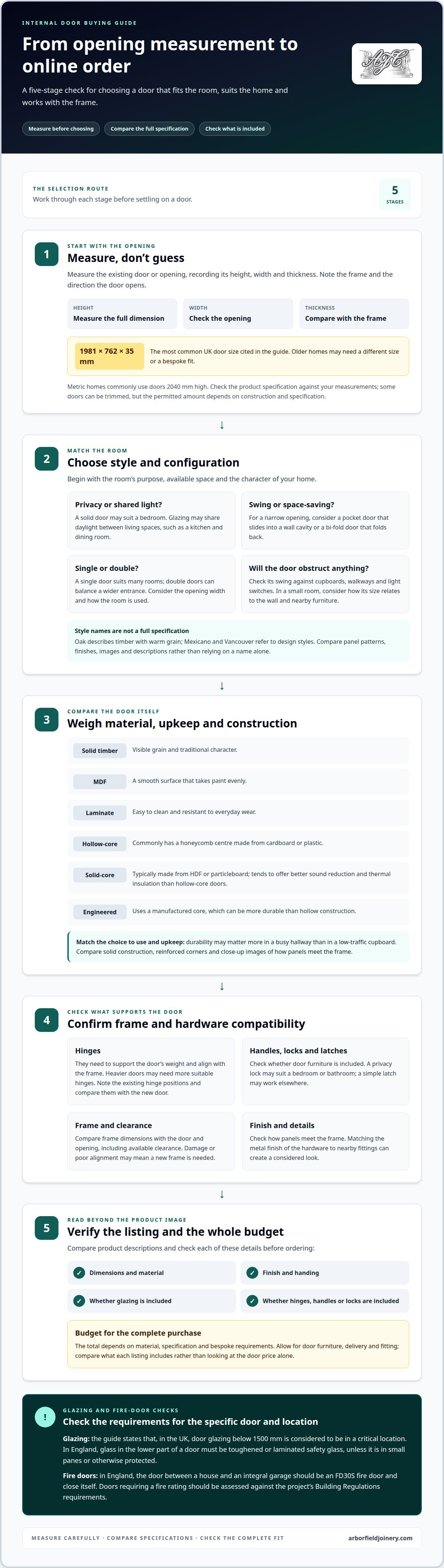
The right internal door starts with a careful measurement, not a guess. The most common UK size is 1981 x 762 x 35 mm, but older homes may have frames that need a different or bespoke fit. A key part of what to consider when buying internal doors online is measuring the opening accurately before choosing a standard size.
It’s easy to focus on colour and style first, but incorrect dimensions can affect how a door fits and operates. Measure the existing door or opening, including height, width and thickness, and note the frame and opening direction. If you’re replacing a door in an older property, don’t assume a standard size will fit.
This guide explains how to measure for the right size and compare styles, materials, construction and hardware. You’ll also learn which online listing details matter, from whether glazing is included to what to budget for, so you can choose a door that suits your home.
Key Takeaways
- Measure the opening carefully and account for the frame, door thickness and opening direction before selecting a size.
- Choose a style that suits the room’s privacy, light and space needs, as well as your home’s character.
- Compare materials for durability and upkeep, then look closely at construction quality and the hardware required.
- Read online product details closely, including whether glazing is supplied and what else you’ll need for a complete purchase.
1. Choosing door styles and configurations
Start with the room’s purpose, available space and existing architecture. A bedroom may benefit from a solid door for privacy, while a living room may suit glazing that shares daylight. For a narrow opening, consider a pocket door that slides into a wall cavity or a bi-fold door that folds back instead of swinging across the floor.
Oak, Mexicano and Vancouver are style names you may see when browsing internal doors. Oak describes timber with a warm grain and natural character; Mexicano and Vancouver refer to particular design styles. Panel patterns and finishes vary, so compare product images and descriptions rather than relying on the name alone. A painted finish, for example, looks different from visible oak grain.
Match the door’s lines and finish to your home’s architecture. Classic panel detailing may feel cohesive in a traditional property, while clean lines and restrained finishes can suit a contemporary interior. Repeating one design through a hallway and adjoining rooms creates visual flow. You can vary the configuration where the space calls for it, such as choosing glazed doors between a kitchen and dining room.
Consider the opening before settling on a style. A single door suits many rooms, while double doors can balance a wider entrance. In a small room, a large or ornate design may dominate, so check how the door’s size relates to the wall and nearby furniture. Consider its swing, too: could it obstruct a cupboard, walkway or light switch?
Glazing affects both the look and practical use of a door. In the UK, door glazing below 1500 mm is considered to be in a critical location, according to UK Government. For a glazed design, consider where the glass sits and whether it suits the room’s privacy needs. These checks help narrow your choice to styles that complement the interior and work with the opening.
2. Door materials, durability and maintenance
Choose a door material based on how often the room is used, the finish you want and the upkeep you’re prepared to do. Solid timber shows its grain and has a traditional character, while MDF provides a smooth surface that takes paint evenly. Laminated finishes are easy to clean and resist everyday wear.
Hollow-core doors commonly have a honeycomb centre made from cardboard or plastic; solid-core doors are typically made from HDF or particleboard. Engineered doors use a manufactured core, which can be more durable than hollow construction. Solid-core options also tend to offer better sound reduction and thermal insulation than hollow-core doors.
Durability may matter more in a busy hallway than in a low-traffic cupboard. A bedroom door should provide privacy, while a glazed door may suit a shared living area where natural light matters. Match the panels, colour and finish to nearby woodwork: a painted door, for example, creates a different effect from natural oak grain.
An internal door’s total cost depends on its material, specification and any bespoke requirements. Allow for door furniture, delivery and fitting in your overall budget. These costs affect the total, so compare what each online listing includes rather than looking at the door price alone.
Some internal doors can be trimmed to fit smaller frames, but the permitted amount depends on their construction and product specification. Measure the opening carefully before ordering, then compare it with the listed door size. A common UK size is 1981 x 762 x 35 mm; metric homes commonly use doors 2040 mm high.
Choose single or double doors according to the opening width and how the room is used. Fire doors require particular care: in England, the door between a house and an integral garage should be an FD30S fire door and close itself. Doors requiring a fire rating should be assessed against the project’s Building Regulations requirements. For a practical finish, explore laminate internal doors.
3. Construction quality and hardware
Before ordering, compare the door’s construction details, not just its finish. Look for solid construction and reinforced corners, which can help the door withstand regular use. Clear product descriptions and close-up images can show how panels meet the frame. A classic traditional design may have raised panels, while a contemporary door often has cleaner lines.
Check whether the listing includes hinges, handles or locks. If door furniture is sold separately, allow for it in your budget and make sure the hardware suits the door’s intended use. A privacy lock may suit a bedroom or bathroom, while a simple latch may work elsewhere. Matching the metal finish to nearby fittings creates a considered look.
Hinges need to support the door’s weight and align with its frame. Heavier doors may require more suitable replacement hinges, rather than the hardware already fitted to a lighter door. Before buying, note the hinge positions on the existing frame and compare them with the new door. This helps identify whether the doorway needs adjustments.
A sound frame supports smooth opening and a neat finish. Compare its dimensions with the door and opening, including the available clearance. If the existing frame is damaged or poorly aligned, a new frame may be needed to achieve a suitable fit. A well-fitted frame also gives hinges a secure fixing point.
For glazed doors, check the glass specification as well as its appearance. In England, glass in the lower part of a door must be toughened or laminated safety glass, unless it is in small panes or otherwise protected. Consider how the handles and glazing sit together, especially on a frequently used door. Reviewing construction, frame compatibility and hardware together helps you choose a door that looks right and operates reliably.
4. Buying internal doors online
Online listings make it easy to compare styles, finishes and construction details side by side, but product images don’t tell the whole story. When considering what to consider when buying internal doors online, read the full description for dimensions, material, finish, handing and whether glazing is included. Screen colours can differ from the actual finish, so compare written details with the photographs.
Delivery, returns and warranty terms vary between retailers. Read the published terms to understand delivery arrangements, what to do if a door arrives damaged, which returns are accepted and what the warranty covers. Check these details before ordering, especially for bespoke sizes or doors prepared to your measurements, which may have different return conditions.
To assess quality, look for clear specifications on construction, materials and hardware. For a glazed door, check whether glass is included and what type is fitted. If you’re considering fire doors, compare the stated rating and whether the listing describes a complete doorset or the door leaf alone. Look for customer reviews with specific comments about product accuracy, packaging and delivery, rather than relying only on star ratings.
Incorrect measurements can leave a door too large or too small for the opening, while rough handling can cause visible damage. Measure the opening in several places and compare the smallest relevant measurement with the product dimensions. On delivery, inspect the door’s surface, corners and glazing before fitting. A poor fit can prevent smooth operation, and installation quality affects how the finished door performs.
A clear checklist of what to consider when buying internal doors online should also include the door, furniture, delivery and fitting in your overall budget. A glazed door between a kitchen and dining room, for example, may need different privacy and light considerations from a bedroom door. Compare like for like: matching dimensions, materials and included components makes online options easier to judge. For a considered choice, browse internal door designs and compare the details that suit your rooms.
Arborfield Joinery
Arborfield Joinery can help you turn your measurements and design preferences into a considered internal door choice. Explore Oak Doors, Walnut Doors, White Primed Doors and Urban Doors to compare finishes and styles for your rooms. Once you’ve identified the opening, the level of privacy you want and your preferred look, use the product details to narrow down a suitable design and specification.
This approach is useful when you’re weighing up several designs or replacing doors in more than one room. Decide which features matter most, such as matching finishes, natural grain or a clean painted appearance, and use those priorities to guide your selection.
Contact Arborfield Joinery to discuss choosing internal doors for your home.
Make your next choice with confidence
Think beyond a single doorway: an internal door is part of your home’s everyday rhythm, shaping how rooms connect and feel. Before choosing, decide what you want the finished space to express, whether that’s the warmth of natural timber or a calm, painted look. This gives your online search a clear direction and helps you choose a design that feels at home over time.
Knowing what to consider when buying internal doors online is a useful starting point, but comparing finishes with your own interior can bring the decision into focus. Arborfield Joinery offers Oak Doors, Walnut Doors and White Primed Doors, giving you distinct looks to consider as you refine your choice.
For advice as you decide which direction suits your home, contact Arborfield Joinery. Take your time, trust the priorities you’ve set and choose a door that makes the space feel more considered.
Frequently Asked Questions
How do I choose the correct door size?
Choose a door that suits the frame and opening, not just its appearance. If you’re replacing an existing door, use it as a reference and compare its dimensions with the product listing. For a new opening, measure at several points and use the smallest usable measurement. If the frame is uneven or the opening is unusual, a standard size may not fit neatly.
What measurements are needed for an internal door in the UK?
Record the opening’s height and width, the existing door’s thickness and the frame’s dimensions. Measure at the top, middle and bottom, since older frames can vary across their height or width. Note the hinge positions and the space available for the door to swing. These details help you distinguish the door leaf size from the opening size when comparing product specifications.
How do I choose the correct door size and handing online?
Match the listed door dimensions to your measurements, then decide which way it needs to open. Stand on the side where you expect to pull the door towards you and note the hinge side; this helps identify its handing. In the UK, internal doors usually open into a room, but furniture, switches or a narrow hallway may make another direction more practical.
Which internal door materials and styles are best for different rooms?
Choose a door to suit each room’s use. In a busy kitchen, a laminate finish can be practical because it’s easy to clean and resists everyday wear. A bedroom may benefit from a more substantial door for privacy and reduced sound transmission. In a darker hallway, glazing can share light, while a glazed door may be less suitable where you want more privacy.
Do UK internal doors need to meet fire-door regulations or building standards?
Fire-door requirements depend on the building and the door’s position. In England, the door between a house and an integral garage should be an FD30S fire door and should close itself. Other internal doors may have project-specific requirements, so distinguish an ordinary room door from one required to provide fire protection. A door’s intended use and location are key considerations.
What UK fire-door ratings and specifications should I check when buying online?
Check the required fire-resistance period and whether the specification applies to the door alone or the complete doorset. A project may require a 30-minute or 60-minute fire rating, assessed against its Building Regulations requirements. For a house-to-integral-garage door in England, the stated recommendation is FD30S with self-closing action. Make sure the product description identifies the rating relevant to your intended location.
Share:
How Long Does Exterior Wood Stain Last? 7 Signs It's Time
7 Steps to Calculating Window Clearance for Smooth Operation