
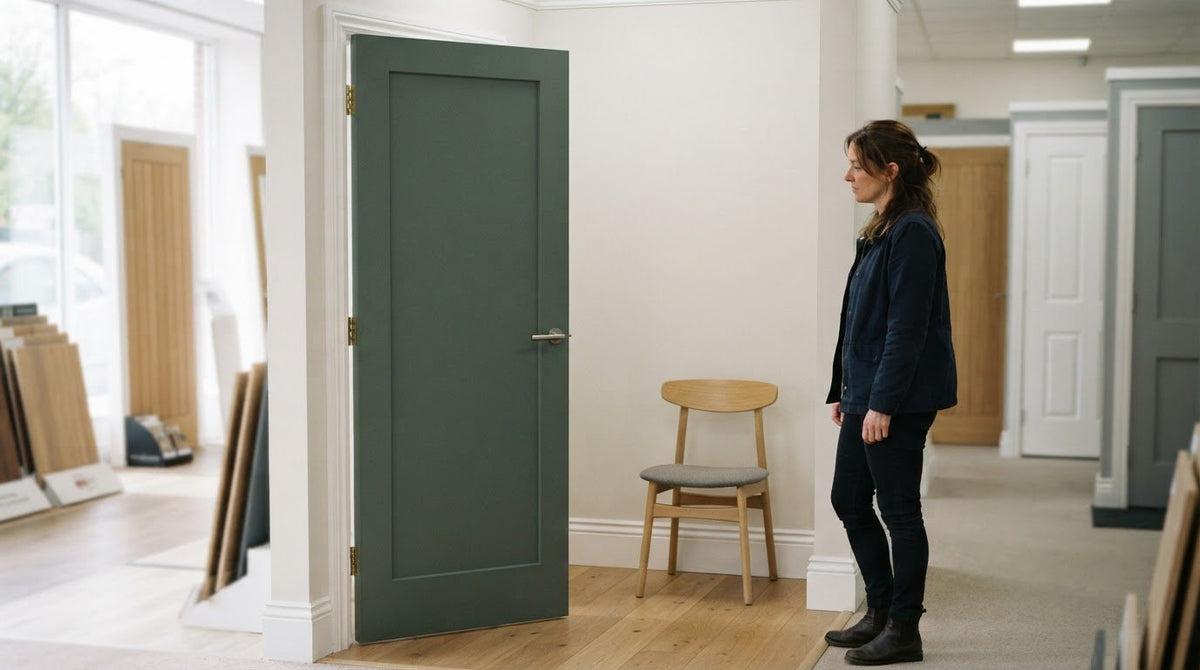
A door can help a small room feel more spacious when its colour works with the walls rather than competing with them. To understand how to make a small room look bigger with doors, consider the effect you want: a darker door against lighter walls can add depth, while matching the door to the walls creates a more continuous look. Clear routes through the room matter just as much as colour.
It’s easy to focus on pale paint alone, but the contrast between surfaces also shapes how far away the walls seem and where the eye travels. A considered door colour, paired with a calm layout, can make a compact room feel brighter and easier to move around in.
Here, you’ll learn how to use contrasting or coordinated colours, arrange furniture to preserve clear routes and choose door styles that suit a smaller space. The aim is a room that feels open and considered without losing its character.
Key Takeaways
- Choose a darker door against light walls for contrast, or match the door to the walls for a more continuous feel.
- Keep walkways clear and arrange furniture to preserve open sightlines and make movement through the room easier.
- Look for door designs with vertical lines to draw the eye upwards and emphasise ceiling height.
- A pocket door can free up space normally needed for a door swing, but consider how its wall cavity affects the room’s layout.
1. Using contrasting wall and door colours to create an illusion of space
For a lighter, airier bedroom, use soft neutrals across the walls, ceiling and floor. White can help reflect light, while a consistent palette makes boundaries less distinct. This visual effect lets the eye travel through the room instead of stopping at every change in colour.
For contrast, choose a door darker than the surrounding walls. The lighter walls can then seem farther away, adding depth without changing the room’s footprint. A dark feature wall can create a similar effect, especially opposite the entrance, while the other walls remain pale. In a narrow space, try making the shorter opposing walls one or two shades darker than the longer walls to make the room appear squarer.
Which door colours and finishes make a small room look bigger? Choose a light, neutral door for a calm, continuous effect, or a darker finish against pale walls to create visual depth. A smooth, understated finish keeps the door from competing with furniture, mirrors and lighting.
For a stained door beneath an arch window, extend the stain colour around the arch and its surrounding area. This creates one visual feature instead of several abrupt transitions. Before applying a dark stain to stone, make a sample to see how it looks beside the door and existing finishes.
Do glazed or frosted-glass doors make small rooms feel more spacious? They can let light pass between spaces, making a dim room feel more open. Frosted glazing softens views while preserving privacy, which can help when a solid door would leave a bedroom or adjoining space feeling shadowed.
What UK building regulations apply to changing an internal door or doorway? Changing a door’s colour is different from altering the opening. Changes to a doorway may involve building requirements, particularly where fire safety or structural work is affected. The implications depend on the work and the doorway’s role.
What does it cost in the UK to install a sliding, pocket or glazed door? The cost depends on the door, the existing opening and the work needed to accommodate it. A pocket door may require changes inside the wall, while the glazed design’s specification also affects the overall cost.
2. Room layout and circulation
Start with the route from the doorway to the room’s main feature, such as a window or desk. Keep that path clear, then place appropriately scaled furniture beside it rather than across it. A streamlined interior lets the eye travel farther, helping the room appear more spacious.
Leave some visible floor around furniture instead of pushing every piece tightly against the walls. A small gap between a sofa and wall can create depth, and exposed legs reveal more flooring beneath. Keep taller pieces, such as a bookcase, against one wall so they don’t interrupt sightlines across the room.
In a bedroom, a bedside table with drawers can reduce the need for extra storage furniture. Wall-mounted shelves, lights and televisions free up floor space, while a folding desk can be tucked away after use. Put everyday clutter in cupboards or drawers rather than letting it gather beside the door or window.
Natural light also affects how open a space feels. Place a mirror opposite a window to reflect daylight and part of the view into darker areas. Keep window coverings light and open them during the day where practical. Vertical lines in a wall treatment or a tall, slim lamp draw the eye towards the ceiling, making it appear higher.
Can replacing a standard door with a wider or taller door make a room look bigger? A taller door can draw the eye upwards and suggest greater height, while a wider opening can improve the sense of connection with the adjoining space. Either change affects the room’s proportions, but neither adds floor area.
Are mirrored doors effective for making a small room look larger? Yes, they can reflect light and the view, adding a sense of depth. Position mirrored doors where they reflect a window or an uncluttered part of the room, rather than a busy corner.
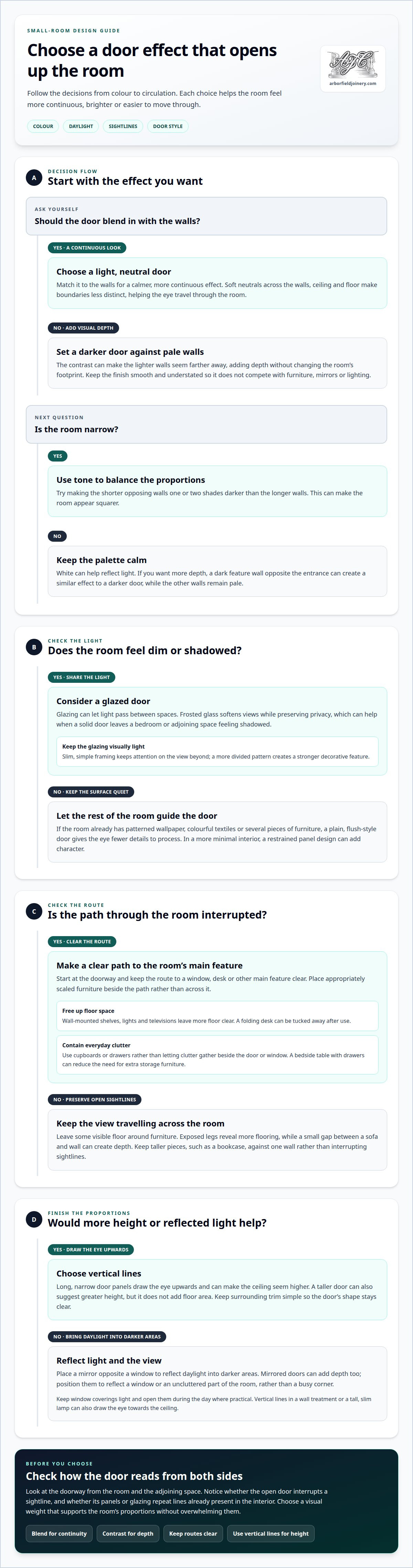
3. Which door styles make a small room look bigger?
Choose a door whose lines suit the room’s proportions. Vertical detailing draws the eye upwards and can make the ceiling seem higher. For example, long, narrow panels create a stronger sense of height than broad horizontal panels. Keep the surrounding trim simple so the door’s shape remains clear, without extra visual breaks.
A plain, flush-style door can work well when a small room already has patterned wallpaper, colourful textiles or several pieces of furniture. Its uninterrupted surface gives the eye fewer details to process. In a more minimal interior, a panelled door can add character. Choose a restrained layout, such as two tall panels, rather than a busy arrangement of small shapes.
Glazing is another consideration for a doorway near a dark hall or a room with limited daylight. A glazed design can share light between adjoining spaces, while its framing influences how open it looks. Slim, simple lines keep the focus on the view beyond; a more divided pattern creates a distinct feature. Decide whether light flow or a stronger decorative detail matters more in that position.
Consider the door alongside the room’s existing architecture. In a period home, a classic panel design may sit naturally with original skirting and mouldings. In a contemporary flat, a clean-lined door can echo simple furniture and uncluttered finishes. Matching the door’s visual weight to the room helps it feel intentional rather than like an oversized feature competing for attention.
Before choosing a door, look at the doorway from the room and the adjoining space. Notice whether the open door interrupts a sightline and whether its panels or glazing repeat lines already present in the interior. A slim vertical pattern can reinforce a sense of height, while a quieter surface helps keep a compact room’s design calm. The best style supports the room’s proportions without overwhelming them.
4. Do pocket doors make rooms feel larger, and what are their drawbacks?
A pocket door slides into a cavity within the wall, so it doesn’t need clear floor space for a swinging leaf. In a compact study, that can leave more room for a chair beside the doorway. When open, the door sits out of sight, creating a cleaner view between adjoining spaces and helping the floor plan feel less interrupted.
That benefit depends on how the room is used. In a narrow bedroom, a conventional door’s swing may restrict where you can place a bed or wardrobe. A pocket door removes that swing zone, making the layout easier to organise. It doesn’t increase the room’s floor area, though, and a closed door still separates the spaces.
The main drawback is the wall cavity. The door needs a suitable section of wall in which to slide, so existing pipes, cables, sockets or switches may affect the design. A wall that supports a load-bearing structure may also limit alterations. Planning the doorway means considering what is inside the wall, not just the visible opening.
Think about privacy and everyday use, too. Pocket doors can leave small gaps around their edges, so they may provide less sound separation than a well-fitted hinged door. Their sliding hardware also needs to move freely; damage or wear inside the cavity can make access and repairs less straightforward than with visible hinges.
Before choosing a pocket door, picture it both open and closed. Check whether the wall can accommodate the sliding panel, whether furniture will stay clear of its path and whether sound separation matters for that room. A pocket door suits layouts where reclaiming the swing area is valuable; a hinged door may be simpler where wall space or privacy takes priority.
Explore pocket door options when a clear floor area is central to your room plan.
Arborfield Joinery
Arborfield Joinery can help you consider how a door’s colour, finish and design will work in a smaller room. Its range includes Oak Doors, Walnut Doors, White Primed Doors and Urban Doors, giving you different looks to compare with your walls, furnishings and available light. Pocket and glazed doors can also help with circulation or light between spaces when they suit the layout.
Decide on the effect you want before choosing: a quieter door can blend into the interior, while a contrasting finish makes it a feature. The right choice depends on your room’s proportions and the style you want to create. Contact Arborfield Joinery to discuss door options for your space.
Choose a door that belongs in your vision
Before settling on a finish, picture the room at different times of day. A colour that feels calm in morning light may look more pronounced under evening lamps, so consider how the door will sit alongside your existing finishes. A considered approach to how to make a small room look bigger with doors starts with choosing the atmosphere you want, rather than simply following a trend.
Arborfield Joinery offers Oak Doors, Walnut Doors and White Primed Doors, giving you distinct starting points for your room’s character. Decide whether you want the door to blend quietly into its surroundings or become a defining detail. A clear preference makes it easier to select a design that feels at home in your space.
Contact Arborfield Joinery for door advice and take the next step towards a room that feels thoughtfully put together. A well-chosen door can bring your wider interior vision into focus.
Frequently Asked Questions
How do I make a small room look bigger?
Make the room feel taller by hanging curtains close to the ceiling and letting them fall towards the floor. In a compact living room, this draws the eye upwards instead of stopping at the window frame. Keep the fabric simple and avoid a heavy pelmet that creates a strong horizontal line. This is a useful finishing touch when changing the room’s layout isn’t practical.
Do sliding doors save space in small rooms compared with hinged doors?
Yes, a sliding door can avoid the floor area needed for a hinged door’s swing. A surface-mounted slider travels along the wall, so it doesn’t need a cavity, but the wall beside the opening must remain clear. That can rule out placing a bookcase or artwork there. A pocket door disappears into the wall but requires a suitable cavity.
How should a door swing be positioned to maximise usable space in a small room?
Arrange the swing so the open door rests against a wall rather than across the room’s main route. For example, place the hinges on the side that lets the door open away from a wardrobe or desk. This keeps those areas accessible and avoids making the doorway feel blocked. Consider where the handle and door leaf will sit when fully open.
How can you make a small room look bigger with doors on a low budget?
Refresh the existing door rather than replacing it: paint it to suit the room, then remove hooks or hanging items that make the doorway feel busy. Keep the floor immediately inside the entrance clear, too. A coat rack or laundry basket beside the door can make the entry feel tight; moving it elsewhere opens up the first view into the room.
Share:
Frosted or Clear Glass Doors: Which Should You Choose
Lacquer vs Oil for Internal Joinery: Which Finish Wins?