
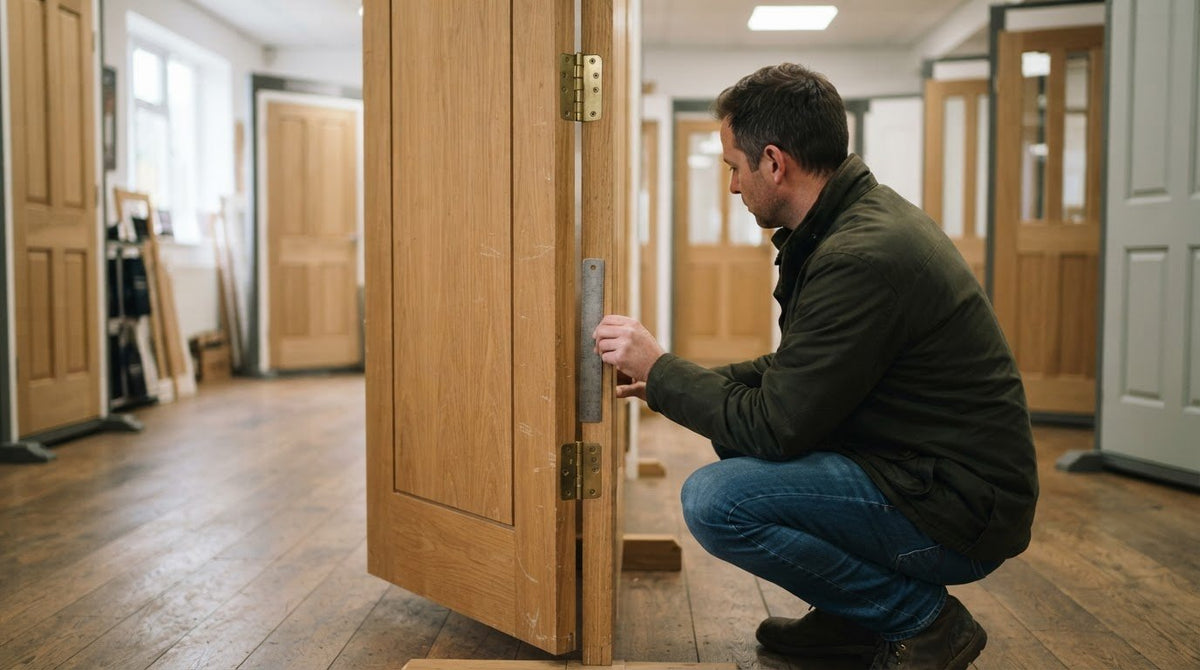
A beautiful door can still be the wrong choice if it doesn’t fit. Many common mistakes when buying new doors are avoidable: measure the frame rather than the old door, take measurements in several places and use the smallest, then check the door’s thickness against the frame. These simple checks can reveal a mismatch before you order.
It’s easy to focus on the finish and assume the practical details will fall into place. But a door needs to suit its opening, the room’s use and the character of your home. Getting those decisions right from the start helps the result feel as considered as it is functional.
This guide explains how to measure accurately, check the frame rebate, choose a style that complements your home and plan for the cost of internal doors as part of your wider interior budget. It also covers details that can be overlooked, such as opening direction and whether handles, hinges and latches are included, so you can make your choices with greater confidence.
Key Takeaways
- Measure the frame rather than relying on the old door, and take measurements in three places to catch variations before choosing a replacement.
- Check the frame rebate against the door’s thickness so the new door fits securely and sits correctly.
- Consider how the door’s design, finish and glazing will complement your home and suit the room’s needs.
- Build internal doors into your wider interior budget, remembering that fittings may be a separate consideration.
1. How Can You Avoid These Front Door Buying Mistakes?
A well-made front door can still underperform if it isn’t installed correctly. Before selecting a door, consider the installer’s experience with similar doors, including glazed designs, and ask who will supervise the work. Find out whether the crew consists of employees or subcontractors, and ask about insurance for the work. These details help you understand who is responsible on installation day.
Clarify the full process before agreeing to the work. Ask how the existing door will be removed, how the sill and opening will be protected from water, and what happens if concealed damage appears. Agree how extra work will be explained and approved before it proceeds. A written proposal should also make clear whether it covers the complete frame and door or only a replacement slab, plus any removal, disposal and trim.
Keep product and installation cover distinct. A product warranty relates to the door or its components; an installation warranty relates to the fitting work. Read what each covers, how long it applies and what steps are needed to make a claim. In particular, ask whether labour to replace a covered part remains covered after the installation warranty ends. A workmanship guarantee should explain which installation faults it covers and how they’ll be addressed.
Check the finished work methodically. The door should open and close smoothly, meet the frame evenly and latch securely. For a glazed front door, establish the glass specification before work begins and ask the installer to explain how it suits your needs. Ask the installer to explain any differences between the planned and completed work.
Door swing mistakes include choosing the wrong handing or forgetting clearance for furniture and the entry route. Most entry doors open inwards; confirm the hinge side and swing direction against the hallway layout before ordering. A couple of minutes planning can prevent the open door from obstructing a walkway or striking nearby furniture.
2. Measuring the frame and checking its rebate
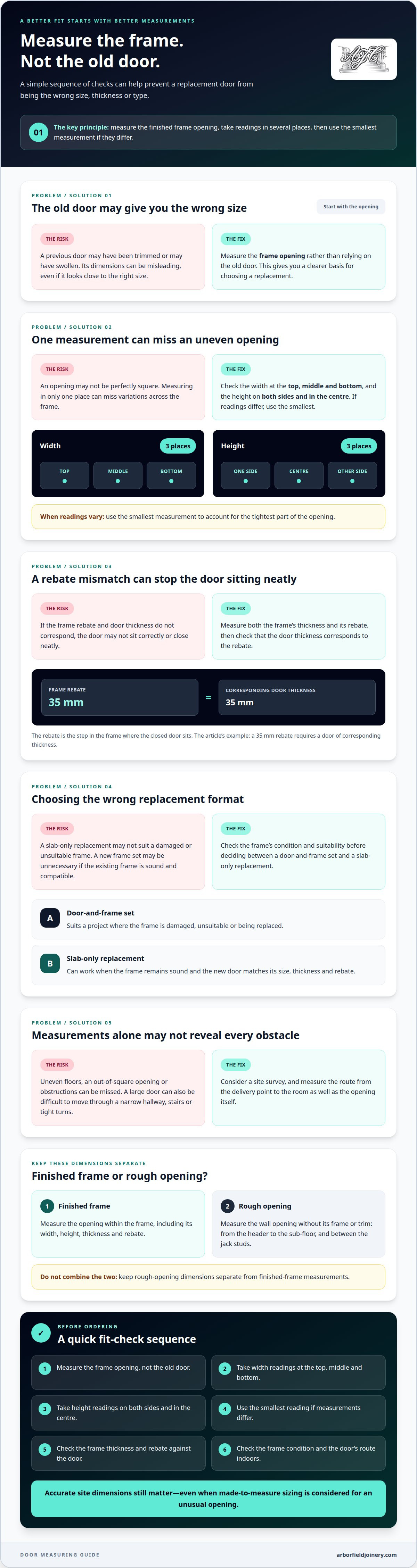
Measure the frame, not the old door: previous trimming or swelling can make the old door’s dimensions misleading. Measure the opening’s width at the top, middle and bottom, and its height on both sides and in the centre. If readings differ, use the smallest measurement. This gives you a clearer picture of an opening that may not be perfectly square.
Measure the frame’s thickness and rebate too. The rebate is the step in the frame where the closed door sits; a 35 mm rebate requires a door of corresponding thickness. A mismatch can prevent the door sitting correctly or closing neatly. For a rough opening, measure the wall opening without its frame or trim, from the header to the sub-floor and between the jack studs. Keep rough-opening dimensions separate from the finished frame measurements.
Before ordering, establish whether the existing frame is sound and suitable for reuse. A door-and-frame set suits a project where the frame is damaged, unsuitable or being replaced; a slab-only replacement can work when the frame remains sound and the new door matches its size, thickness and rebate. A site survey can identify uneven floors, out-of-square openings and obstructions that measurements alone may miss. Made-to-measure sizing can address unusual openings, but accurate site dimensions still matter.
Buying online without checking the opening can leave homeowners with a door that needs costly alteration or won’t fit. Measure the route from the delivery point to the room as well: narrow hallways, stairs and tight turns can complicate moving a large door indoors. Before ordering, read the seller’s delivery, damage-reporting and returns terms, especially for made-to-measure items. Weather exposure during storage can also affect an unfinished door, so plan where it will be kept before it’s fitted. For a style choice alongside careful sizing, explore oak door designs.
3. Choosing doors that suit the home’s style
A door should feel connected to the rooms around it, not chosen in isolation. Consider the property’s period, existing woodwork, floors and colour palette before settling on a design. A traditional panelled door can sit comfortably with classic mouldings, while a simpler profile may complement a pared-back interior. Matching the door’s style to the home helps create a cohesive look.
Finish and material shape the overall impression. Oak and walnut have distinctive natural grain and warmth; a white primed door provides a surface ready for painting to suit your scheme. Glazed designs can bring natural light between rooms, but consider how much privacy each space needs. Decide whether to use one finish throughout adjoining rooms or choose different treatments for particular spaces.
Plan the hardware with the door, rather than treating it as an afterthought. Handles, hinges and latches are usually sold separately, so include them in your selection and budget. Check that their finish and shape complement the door, and keep handle heights consistent across adjoining doors. The handle should also feel comfortable to use, while the latch and hinges need to suit the door and its frame.
For a fire door, choose one accredited through a recognised scheme, such as BWF-CERTIFIRE, to comply with regulations as a fire door. Don’t assume an ordinary internal door is suitable for this purpose. Match the specification to the location and preserve the door’s certification by following its fitting requirements. A reputable manufacturer should be able to fulfil guarantee claims; find out what its guarantee covers and how claims are handled before ordering. Trying to save time by choosing on appearance alone can overlook these practical distinctions. Consider style, finish, fittings and the door’s intended use together for a considered result.
4. Budgeting for internal doors
Start with the whole-room plan, not just the door price. Count each opening and note whether you’re replacing a door, changing its frame or creating a new opening. Then allow for the door, hardware, any frame work and fitting. A house-wide refresh may call for a glazed door in a darker hallway and a solid design where privacy matters.
Internal and external doors have different jobs, so their specifications aren’t interchangeable. External doors face the weather and form part of the home’s entrance, while internal doors separate rooms and support their intended use. Consider the location, security, insulation and finish needed before setting your budget; an entrance door and a bedroom door shouldn’t be compared on appearance alone.
How much will new doors cost, including fitting? The total depends on the number of doors, their material and design, whether frames need replacing, the hardware selected and the fitting work. Include these elements in your overall interior budget rather than treating each door as a standalone purchase. Ask for product and fitting costs to be itemised so you can see what contributes to the total.
When replacing several doors, decide whether consistency or room-by-room function matters most. A shared finish can create a calm flow through the hallway, whilst different glazing or opening styles can suit particular rooms. Pocket and bi-fold doors, for instance, change how a space is accessed and used. Include these decisions before settling your budget, since the opening and chosen design affect what is required.
Also allow for finishing and preparation. A primed door may need painting, while unfinished timber requires its own finish; include materials and time in your plan. Discuss the scope of fitting, frame condition and hardware before committing. To plan your choices across the home, explore internal door options alongside your room-by-room budget.
There isn’t one fixed cost: the total depends on the number of doors, their material and design, whether frames need replacing, the hardware selected and the fitting work involved. Include any preparation and finishing in your budget too.
Arborfield Joinery
Arborfield Joinery sells a range of internal doors for replacements and interior refreshes. Oak, walnut, white primed and urban designs offer different ways to complement your home’s character, finish and colour scheme.
Once you’ve checked the opening, rebate, room requirements and overall budget, compare styles with those practical details in mind. Arborfield Joinery can help you explore its door options and find a direction that suits your home and project.
Contact Arborfield Joinery to discuss your door choices.
Choose doors with your home’s future in mind
A door becomes part of the everyday rhythm of a home, so choose with more than the immediate renovation in mind. Think about how the rooms may be used over time and whether you want a cohesive look that will still suit changing furnishings and colours. A clear sense of your priorities can turn a long list of possibilities into a considered choice. Avoiding common mistakes when buying new doors means treating each decision as part of your home’s character, not simply filling an opening.
Arborfield Joinery offers oak, walnut and white primed doors, giving you distinct starting points for a natural, warm or paint-ready finish. Explore the options that best suit your plans, then take the next step when you’re ready.
Contact Arborfield Joinery today to discuss your door choices. A thoughtful decision now can help your home feel more complete for years to come.
Frequently Asked Questions
Does it measure up?
A door fits well when it suits the frame and operates without catching. One common mistake when buying new doors is judging fit by width and height alone. Consider thickness, frame fit, floor clearance and nearby fittings too. For example, a door may clear its frame but still strike a radiator when opened. Assess the whole opening and its surroundings.
How can you avoid these front door buying mistakes?
Avoid common mistakes when buying new doors by setting out the full scope before agreeing to a front-door purchase. The proposal should distinguish the door, frame, removal, disposal and trim, and explain how unexpected damage will be handled. Consider the entrance’s exposure to rain and how the sill will be protected. A clear written description helps you understand what is being supplied and what work is planned.
How important is professional installation?
Professional fitting matters because a front door that sits poorly can leave gaps, bind against its frame or fail to latch securely. These faults can affect comfort, weather protection and security, even if the door itself is well made. Check that the agreed work identifies who is responsible for fitting and what workmanship cover applies. Installation is a separate consideration from the door’s product warranty.
What should I look for in a secure front door?
Look at the complete security arrangement, not just the door’s appearance. A multipoint locking system, security handles and an anti-snap cylinder are features to consider; laminated glass can also be relevant for glazed designs. PAS 24 certification may help when comparing applicable front-door security features. Check that the lock, hinges and glazing suit the door’s design and intended use.
How do I choose between standard and bespoke door sizes in the UK?
Choose a standard size when it suits the existing opening and frame without compromising operation. A bespoke size can help with an unusual opening or a design that needs tailored dimensions. Before deciding, consider whether the frame is staying, whether the opening is square and whether the finished door will clear the floor and nearby fittings. The right choice is the one that fits the project as a whole.
Which door materials are best for durability, insulation and maintenance?
There isn’t one best material for every priority. Composite doors typically offer improved strength and insulation compared with uPVC, while uPVC can suit a tighter budget. Material alone doesn’t determine performance: construction, finish, fitting and exposure to the elements also matter. For an internal door, focus on its room, expected use and care requirements, rather than choosing by external-door comparisons.
Share:
Water Based vs Solvent Based Wood Stains: Which to Choose?
Pet-friendly door solutions for cats and dogs: which doors can fit a pet flap