
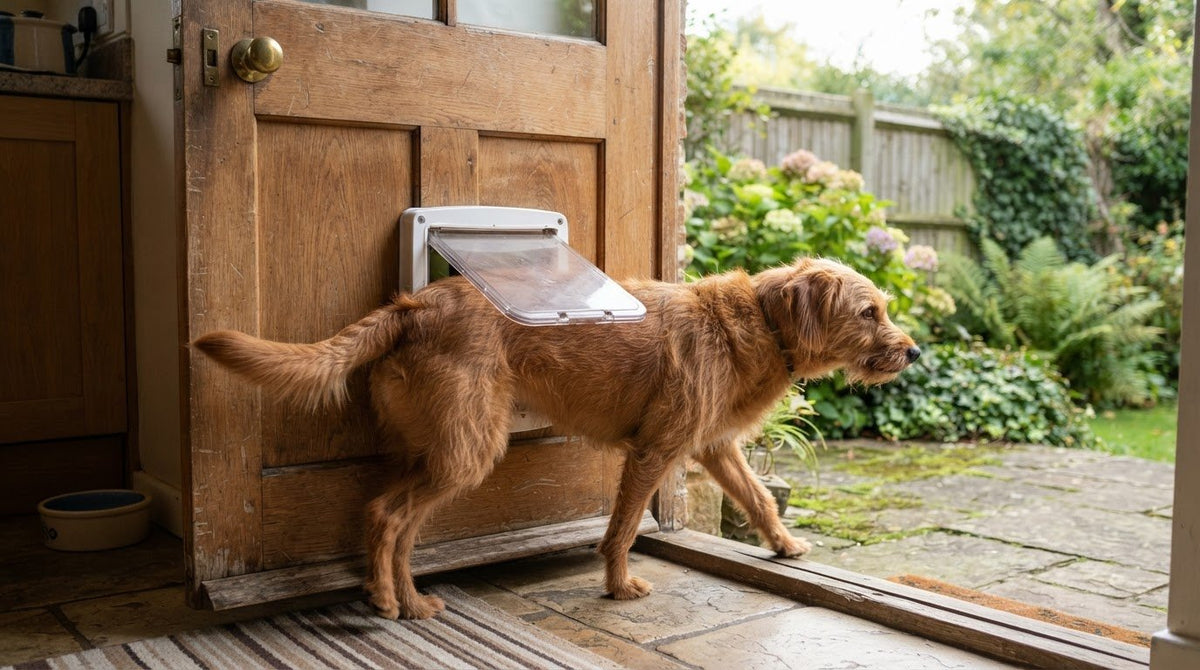
A pet flap isn’t a one-size-fits-all addition to a door. Pet-friendly door solutions for cats and dogs can work with doors and walls made from timber, metal, PVC or glass, but the right option depends on the material, construction and your pet’s size. Glass fitting is best left to a professional.
It’s natural to want your pet to come and go comfortably without compromising your home’s appearance or function. Cats and dogs may need different flap sizes and opening mechanisms, so choosing one involves more than simply finding space in the door.
This guide explains how cat flaps differ from dog doors, which door types may be suitable and what to consider when selecting a flap. You’ll also learn how options such as microchip access, locking settings and quieter flap edges can shape the right choice for your household.
Key Takeaways
- Measure your pet rather than relying on breed assumptions, and use its build to guide the flap size and position.
- Consider how locking settings and access controls can help manage when your pet can pass through.
- Think about the door’s material and construction before choosing a fitting; glass doors need particular care.
- Compare practical details such as flap noise and weather sealing to find an option that suits your home and pet.
1. What is the difference between a cat door and a dog door?
A cat flap is usually sized for a smaller animal, while a dog door needs to suit the dog’s build and movement. Mechanical flaps swing when pushed; dogs commonly use a flexible flap or rubber strips. Cats can use these too, but access controls may matter more in a home with several pets.
Magnetic cat flaps unlock when a special key attached to the cat’s collar approaches. Infrared models respond to a special key worn around the animal’s neck. Chip-controlled doors can open for an animal wearing the correct electronic chip on its collar. Microchip cat flaps instead read a cat’s microchip, run on batteries and don’t require a collar.
Pet doors can be fitted into wood, metal, PVC or glass doors, as well as brick walls, but the material affects installation. Glass fitting is best left to a professional, while cutting into a door or wall can affect its structure. A hinged door may suit some flaps, but its construction and available space matter more than style alone.
Scratch resistance is separate from the flap mechanism. If cats scratch near an interior doorway, a hard-wearing surface can help the door cope with everyday contact. Look for a finish described as scratch-resistant, and consider where paws are most likely to mark it. The finish won’t determine whether the door can take a flap.
There isn’t a single UK-wide yes-or-no answer on building regulations, landlord rules and planning requirements: the property and proposed alteration matter. In a rented or listed home, obtain the relevant consent before cutting into a door or wall. This is especially important if the work involves a structural element or changes the building’s appearance.
2. Are doors for dogs and cats beneficial?
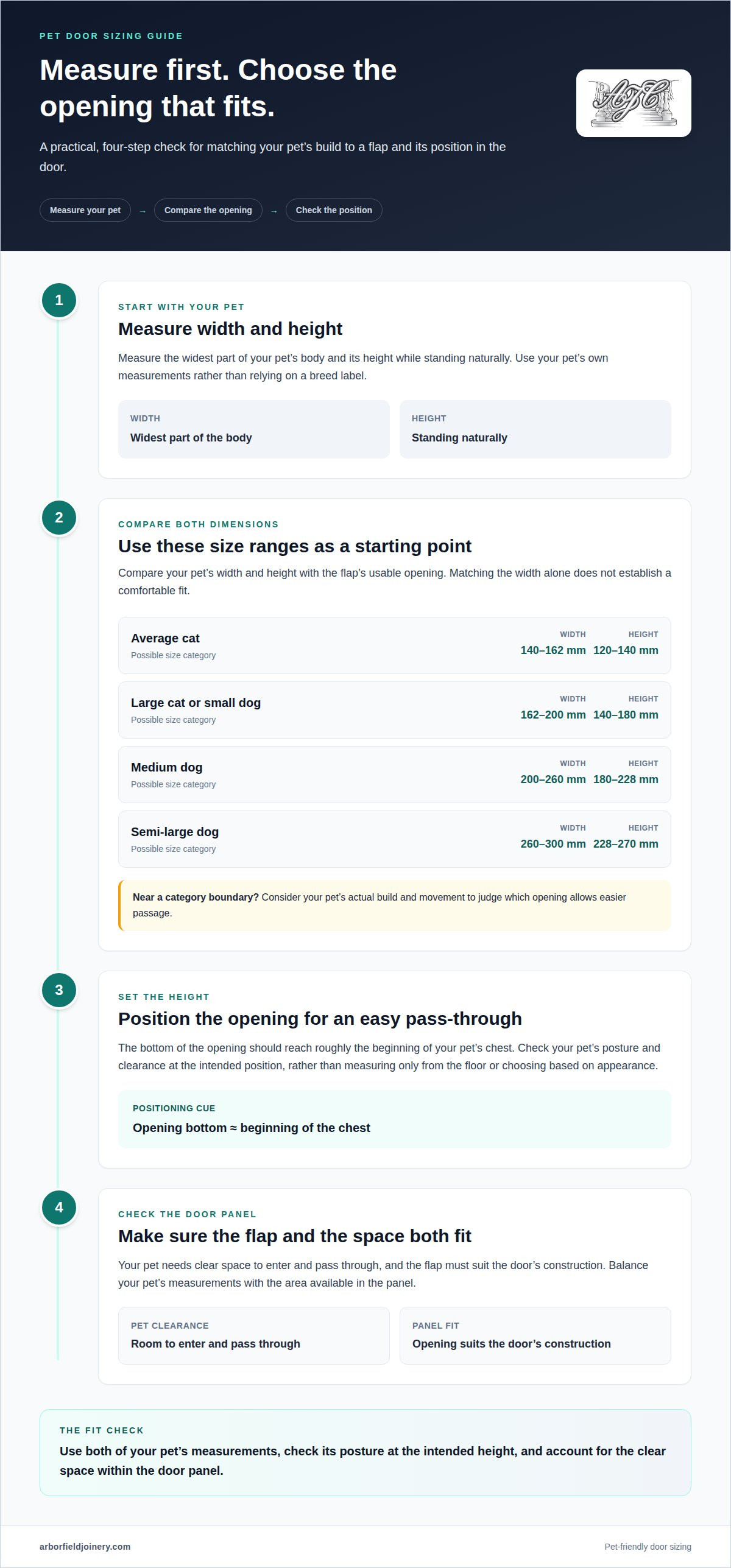
Choosing pet-friendly door solutions for cats and dogs starts with measuring your pet, not relying on a breed label. Body shapes vary, so compare your pet’s width and height with the flap’s usable opening. These approximate size guides are a starting point, but your pet’s own measurements should guide the final choice.
Use the following ranges to identify a possible size category:
- Average cat: 140–162 mm wide and 120–140 mm high.
- Large cat or small dog: 162–200 mm wide and 140–180 mm high.
- Medium dog: 200–260 mm wide and 180–228 mm high.
- Semi-large dog: 260–300 mm wide and 228–270 mm high.
Measure the widest part of your pet’s body and its height while standing naturally. Compare both measurements with the opening dimensions: matching the width alone doesn’t establish a comfortable fit. If the measurements are near a category boundary, consider your pet’s actual build and movement to judge which opening allows easier passage.
Positioning affects the fit, too. The opening’s bottom should reach roughly the beginning of your pet’s chest, helping it pass through without an awkward step. Check your pet’s posture and clearance at the intended position, rather than measuring only from the floor or choosing based on appearance.
Finally, consider how the opening sits within the door panel. Your pet needs clear space to enter and pass through, while the flap must suit the door’s construction. The right size balances your pet’s measurements with the panel’s available area. These practical checks help narrow pet-friendly door solutions for cats and dogs to an option that fits both pet and door.
3. Can any doors have a cat flap or pet door?
A cat flap can give indoor-outdoor cats independent access, while a dog door can let puppies and older dogs outside for toileting. That access may help reduce accidents when a dog needs to go out between walks. The opening should lead to a safe area, not directly onto an exposed route or an unsecured garden.
Locking options determine how pets can pass through. A two-way lock can be set manually to locked or unlocked. A four-way lock offers more control: allow entry only, exit only, movement in either direction, or no passage. These settings can match access to your household’s routine.
Some cat flaps use a collar tag or microchip to restrict entry to recognised pets. This can help prevent an unfamiliar animal from following a cat indoors. Dog doors often have simpler mechanisms, so consider whether unrestricted access suits your home. An unsecured opening may let unwanted animals or intruders inside.
Manual locks suit people who can set the flap at the door, such as before bed or when leaving for a holiday. Remote access is a separate requirement: the two-way and four-way settings described here are operated manually, not controlled from elsewhere. Choose an access method that suits who needs to change the setting and when.
Independent passage can also matter if a pet needs to return indoors quickly. For example, a cat chased by another cat or a fox may use the flap to get back inside. This route doesn’t replace checking that the outside area is safe. A lock that blocks entry and exit removes that option, so consider the setting carefully.
Before settling on a locking arrangement, map out everyday routines: daytime outings, night-time access, toilet breaks and periods away from home. A four-way lock offers distinct choices for these situations, while a microchip-controlled cat flap restricts which animals can enter. The useful option balances your pet’s freedom with your household’s security.
4. Pet door brands and product options
A brand name alone won’t tell you whether a pet door suits your home. Start with your pet’s size, the door material and the access method. A collar-key flap may suit a cat that already wears a collar, while a microchip model avoids adding a tag. For a dog, compare a push-through flap with flexible strips and consider which design it can use comfortably.
Look beyond the opening mechanism. Some pet doors have bristles along the flap edge for quieter passage, which may help in a busy hallway. A well-made dog door can close tightly to help limit draughts and keep out bad weather. The larger the opening, the more carefully you’ll want to weigh ease of access against security and heat loss.
There’s no single UK price for a pet door or professional installation. The total depends on the flap’s mechanism, the door or wall material, and the work needed to create and finish the opening. Fitting into glass involves different considerations from fitting into timber, so product and installation costs vary with the chosen location.
Compare options using a short list: your pet’s measurements, access control, flap movement, noise, weather protection and the intended fitting surface. Then rule out any product that doesn’t meet a practical requirement. A quiet flap won’t compensate for an opening your dog can’t use, and a secure lock won’t help if the door material can’t accommodate the fitting.
The door itself remains part of the decision. A pet opening needs to work with the panel’s construction and appearance, whether you’re considering a traditional timber look or a clean, painted finish. Explore door styles for your home alongside the pet flap’s fitting requirements, so the final choice suits both daily use and the room’s character.
Arborfield Joinery
Arborfield Joinery can help you choose a door style that suits your home while you consider a pet flap. The door’s material and construction are important starting points, since they affect whether a flap can be fitted and where the opening could go. Oak Doors, Walnut Doors, White Primed Doors and Urban Doors offer different looks for your interior or entrance.
If you’re choosing a replacement door as part of planning pet access, consider the flap’s size and mechanism alongside the door’s appearance. This keeps practical access and the room’s finish in view together. Explore suitable door options with Arborfield Joinery.
Plan for a door that suits your home
A pet’s needs can change over time. A growing puppy, an older dog or a newly adopted cat may use a doorway differently as household routines evolve. Think about how the door will look in the room and work alongside the pet flap. A considered choice helps the practical feature feel integrated rather than like an afterthought.
Before deciding, consider which doorway best fits your daily routine and whether replacing the door is part of your plan. This gives you a clearer starting point for choosing pet-friendly door solutions for cats and dogs, with the door and flap considered together. If the existing panel’s construction limits your preferred layout, exploring another door style may help you find a more suitable approach.
For a considered next step, contact Arborfield Joinery about your door choice. A well-planned decision can make your home work beautifully for both you and your pet.
Frequently Asked Questions
Can any doors have a cat flap or pet door?
No single door type suits every pet flap, but fittings are made for several materials, including wood, metal, PVC and glass. Some can also be installed in brick walls. The panel’s construction and available space determine whether an opening is practical. Glass requires particular care, and cutting into a door or wall can affect its structure.
How do you install a pet door in an interior door?
First, choose a position that gives your pet a clear route through the doorway and suits the flap’s size. Mark the opening using the flap’s fitting instructions, then use appropriate tools, such as a drill, screwdriver and saw, to make the cut and secure the fitting. Glass needs professional attention, and cutting into a door can affect its structure.
Are doors for dogs and cats beneficial?
Pet doors can make everyday routines easier by letting an animal pass through without someone opening the door each time. An indoor-outdoor cat, for example, can follow its usual routine, while a dog can reach a suitable outdoor toileting area. The benefit depends on your pet using the flap comfortably and the route outside being safe and accessible.
Can you put a pet door in a hollow core door?
A hollow-core door needs careful assessment before cutting because its internal void may leave limited material around the opening. The flap must be secured without leaving an unstable or poorly finished edge. Consider the door’s construction alongside the fitting’s requirements. If the panel can’t support the opening, a different door or location may be more suitable.
How does it benefit my pet?
A pet door can give an animal more control over its movement through the home. A dog that needs frequent toilet breaks, for instance, may gain easier access to an enclosed garden. For cats, moving between indoor and outdoor spaces can support exploration and exercise. Make sure the route suits your pet’s confidence and mobility.
OK, but what about the downsides of doggie doors?
A dog door can create security and draught concerns, particularly if the opening is large or doesn’t close tightly. It may also let unfamiliar animals into the home, or allow a dog out where the garden isn’t secure. Weigh these drawbacks against your routine, your dog’s behaviour and the outdoor space, then choose a flap with appropriate access control.
Share:
Common mistakes when buying new doors and how to avoid them
Choosing Between Engineered Wood and Solid Wood Doors for Durability